
Why Hybrid Cars Are Booming in India in 2026
The Indian automotive landscape is undergoing a quiet revolution. Hybrid cars — once considered a niche category for eco-conscious early adopters — have firmly entered the mainstream. With petrol prices stubbornly high, city traffic choking fuel economy, and genuine anxiety around EV charging infrastructure outside metros, hybrid vehicles offer a compelling middle ground that resonates deeply with practical Indian buyers.
Unlike full electric vehicles, hybrids require no external charging infrastructure. The battery replenishes itself through regenerative braking and the petrol engine — which means you can drive from Gurugram to Jaipur without a second thought. Meanwhile, in stop-go city traffic, the electric motor quietly takes over, dramatically cutting petrol consumption and emissions. It’s the best of both worlds.
Today, there are 22+ hybrid models on sale in India across a price range spanning ₹10.5 lakh to well over ₹2 crore. This guide focuses on the most relevant options for real Indian buyers — value-conscious families, premium commuters, and everyone in between.
3 Types of Hybrid Cars in India

Mild Hybrid (MHEV)
Uses a small electric motor to assist the petrol engine during acceleration. Does not drive on pure electric power. Offers modest fuel savings (5–10%) and the most affordable entry point.
Entry Level

Strong / Full Hybrid (HEV)
Can run on electric power alone at low speeds. Battery charges automatically — no plugging in needed. Delivers 20–40% better mileage. This is the sweet spot for Indian conditions.
Best for India

Plug-in Hybrid (PHEV)
Can be externally charged for a longer pure-electric range, plus a petrol engine for longer distances. Availability in India is still limited, but options are emerging at premium price points.
Premium Niche
Top 8 Hybrid Cars in India 2026
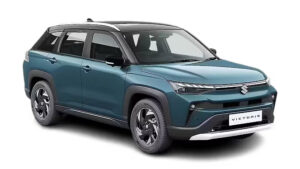
Maruti Suzuki Victoris
Starting Price₹10.50 LakhEx-showroom (Delhi)
The Maruti Suzuki Victoris is the newest and most exciting entry in India’s affordable hybrid space. Built on the same platform as the Toyota Urban Cruiser Hyryder through Maruti’s strategic alliance with Toyota, the Victoris brings strong hybrid technology to the sub-₹20 lakh SUV segment — and tops the fuel efficiency charts at a remarkable 28.65 km/l (ARAI claimed).
Its 1.5-litre, 3-cylinder petrol engine paired with an electric motor and e-CVT transmission seamlessly transitions between electric and petrol power. In heavy stop-go city traffic, the car frequently cruises on electric-only power, making it an ideal companion for daily commuters in Gurugram, Mumbai, or Bengaluru. The cabin is well-appointed with Maruti’s latest infotainment system and a panoramic sunroof on top trims. Backed by Maruti’s unbeatable service network — over 3,500 service centres nationally — ownership peace of mind is virtually unmatched.
28.65 km/l
e-CVT
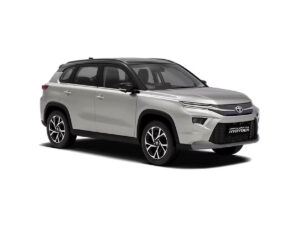
Toyota Urban Cruiser Hyryder
Starting Price₹10.99 LakhEx-showroom (Delhi)
The Toyota Urban Cruiser Hyryder is CarWale’s top-recommended hybrid car in India, and for good reason. Developed in partnership with Maruti Suzuki, it shares its platform with the Victoris but brings Toyota’s hallmark reliability and brand prestige. It uses the same 1.5-litre strong hybrid system delivering a claimed 27.97 km/l — some of the best real-world mileage figures in the segment.
Real-world users consistently report 22–24 km/l in heavy city conditions, which is exceptional for an SUV. Toyota’s hybrid systems are legendary for their longevity — the same technology used in the Hyryder has proven itself globally over two decades. The Hyryder’s AWD option (on the non-hybrid petrol variant) provides flexibility, though the hybrid variant is front-wheel drive only. The top hybrid variant features paddle shifters, a panoramic sunroof, wireless Apple CarPlay, ventilated seats, and a fully digital driver’s display.
27.97 km/l
e-CVT
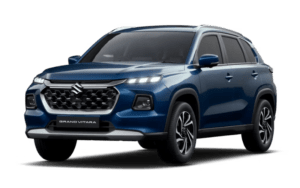
Maruti Suzuki Grand Vitara
Starting Price₹10.77 LakhEx-showroom (Delhi)
The Maruti Suzuki Grand Vitara is the most popular hybrid car in India right now — and it’s easy to see why. As the twin sibling of the Toyota Urban Cruiser Hyryder, it shares the same award-winning 1.5-litre strong hybrid powertrain delivering 27.97 km/l (ARAI), but wraps it in distinctive Maruti Suzuki styling and comes with the added advantage of Maruti’s unrivalled after-sales network of over 3,500 service touchpoints across India.
The Grand Vitara’s design is sharper and more contemporary than the Hyryder’s. Its cabin feels well-crafted for its price point, with a large touchscreen infotainment system, a 360-degree camera, ventilated seats, and a panoramic sunroof available on higher variants. The car handles highway driving with composure, though like most strong hybrids, it shines brightest in urban commuting conditions where the electric motor gets used most frequently.
27.97 km/l
183 BHP
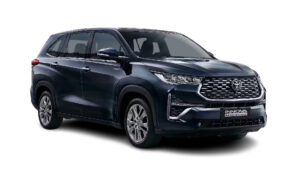
Toyota Innova HyCross Hybrid
Starting Price₹26.76 LakhEx-showroom (Delhi)
The Toyota Innova HyCross is in a category of its own — a premium 7/8 seat MPV with a 2.0-litre strong hybrid powertrain that handles up to 60% of urban driving in pure electric mode. Built on Toyota’s global TNGA-C monocoque platform, the HyCross is a significant departure from its ladder-frame predecessor, delivering far superior ride comfort, handling, and refinement.
The hybrid MPV is the choice of executives, business travellers, and large families who refuse to compromise on space, comfort, or efficiency. Its 23.24 km/l ARAI mileage is remarkable for a vehicle of its size. The interior is richly appointed with ventilated and powered front seats, an ottoman second-row option, a panoramic sunroof, ambient lighting, wireless connectivity, and Toyota Safety Sense — a comprehensive ADAS suite. The HyCross has earned a 5-star BNCAP rating. The waiting period of 3–4 months is a testament to its sustained demand.
23.24 km/l
e-CVT / AT
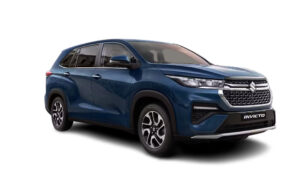
Maruti Suzuki Invicto
Starting Price₹26.91 LakhEx-showroom (Delhi)
The Maruti Suzuki Invicto is Maruti’s flagship product and its first foray into the premium MPV segment, built in close collaboration with Toyota — it is essentially the Toyota Innova HyCross sold under the Maruti badge with unique styling and variant configurations. It shares the same 2.0-litre strong hybrid powertrain and monocoque TNGA-C platform.
What makes the Invicto interesting for buyers is the Maruti factor: the comfort of India’s widest service network at what is essentially the same mechanical package as the HyCross. The Invicto is positioned for buyers who prefer Maruti as a brand and want the reassurance of Maruti’s after-sales ecosystem for a premium MPV purchase. With 7 or 8-seat configurations, panoramic sunroof, ventilated front seats, ADAS, and a claimed 23.24 km/l efficiency, the Invicto delivers compelling value in the premium MPV segment.
23.24 km/l
183 BHP
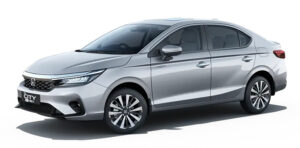
Honda City Hybrid eHEV
Starting Price₹20.00 LakhEx-showroom (Delhi)
The Honda City Hybrid eHEV is the only strong hybrid sedan under ₹25 lakh in India, and it brings a genuinely different proposition to the table. While most competitors in this guide are SUVs, the City Hybrid offers the low-slung elegance, boot space, and driving comfort of a premium sedan — with Honda’s i-MMD strong hybrid system powering it with outstanding refinement.
Honda’s i-MMD (Intelligent Multi-Mode Drive) system is technically sophisticated: the petrol engine primarily acts as a generator, with the electric motor handling most of the driving. The result is a near-EV experience in city conditions, with whisper-quiet operation and instant torque. Its real-world mileage is consistently praised by owners, and the cabin offers genuine premium touches including a floating touchscreen, a 12-speaker Bose audio system, and a spacious, comfortable layout. A facelift is confirmed for launch in late May 2026 with updated features.
26 km/l
I-MMD
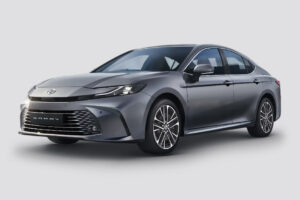
Toyota Camry Hybrid
Starting Price₹47.48 LakhEx-showroom (Delhi)
The Toyota Camry Hybrid is a masterclass in executive luxury combined with hybrid efficiency. Long a favourite of India’s corporate fleet buyers, it is the only hybrid luxury sedan in the sub-₹50 lakh bracket, and it delivers a driving experience that rivals cars costing significantly more. The 2.5-litre 4-cylinder hybrid system produces a combined output of 218 bhp while delivering 23.27 km/l — exceptional for a full-size luxury sedan.
Inside, the Camry is genuinely premium: JBL premium audio, a large touchscreen, a fully digital instrument cluster, leather seats with 8-way power adjustment, dual-zone climate control, and a panoramic sunroof. The ride quality is supremely composed and the cabin remarkably quiet. It’s a car you’re chauffeured in as readily as you drive yourself. Toyota’s Direct Shift e-CVT makes gear changes feel natural and progressive, unlike older CVT systems that felt uninspired.
23.27 km/l
218 BHP
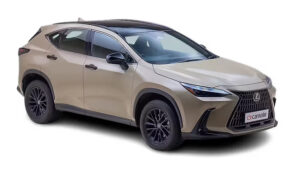
Lexus NX 350h
Starting Price₹67.00 LakhEx-showroom (Delhi)
If budget allows a step into genuine luxury, the Lexus NX 350h is one of the finest hybrid SUVs money can buy in India. The NX 350h integrates a 2.5-litre four-cylinder petrol engine with two electric motors (one front, one rear) to deliver a combined 240 bhp and E-Four AWD capability — a genuine all-season, all-terrain luxury performer.
Lexus’s legendary attention to detail is evident throughout: the NX 350h features a 14-inch touchscreen, Lexus’s signature Tazuna cockpit design, a 17-speaker Mark Levinson premium audio system, a panoramic glass roof, and a comprehensive ADAS suite. Lexus vehicles in India are sold with one of the most comprehensive after-sales experiences in the country, including dedicated relationship managers and a premium service experience. The NX 350h’s hybrid system is among the smoothest in the business — the transition between modes is imperceptible.
240 BHP
E-Four AWD
Key Reasons to Choose a Hybrid Over a Petrol Car in 2026
- 20–40% better mileage in real-world Indian city traffic conditions
- No charging infrastructure anxiety — self-charging, just like a regular car
- Significantly lower cabin noise at low speeds due to electric-mode operation
- Reduced emissions contributing to lower pollution in congested urban areas
- Hybrid batteries are warranted for 8–10 years by manufacturers and last 10–20 years
- Eligible for state-level incentives and lower road tax in several Indian states
Strong Hybrid is Best for Indian Roads
India’s traffic conditions — especially in metros and tier-1 cities — are precisely where strong hybrids shine. The electric motor handles most low-speed driving, regenerative braking recovers energy that would otherwise be wasted, and the petrol engine kicks in efficiently on highways. If you primarily drive in city conditions, a strong hybrid can deliver 22–26 km/l in real-world conditions — roughly double a standard petrol car.
Calculate Total Cost of Ownership
- Hybrids cost ₹2–4 lakh more than petrol equivalents upfront
- Fuel savings over 5 years can recover this premium (at 50 km/day)
- Hybrid battery warranty: 8 years / 1.6 lakh km (Toyota); 3 years typical
- Annual maintenance cost is comparable to or slightly higher than petrol
- Check state-specific road tax concessions — several states offer 50% savings
Safety Features to Prioritise
- 6 airbags minimum — mandatory from Oct 2023 but confirm actual fitment
- ADAS (Automatic Emergency Braking, Lane Keep Assist) — now available in this segment
- 360-degree camera for urban parking
- Electronic Stability Control (ESC/VSC) is standard on all listed cars
- BNCAP rating: Innova HyCross has 5 stars — verify for your shortlisted car
Service Network Matters More Than You Think
Hybrid-specific servicing requires trained technicians. Maruti (3,500+ centres) and Toyota (1,200+ centres) have the best hybrid-trained networks nationally. Honda has a solid urban presence but is thinner in tier-2/3 cities. Lexus has a premium but limited network. For buyers outside metro areas, Maruti’s service dominance is a genuine and practical advantage worth weighing heavily in your decision.
Resale Value & Depreciation
Toyota hybrids (Hyryder, Innova HyCross) retain value exceptionally well — often better than pure petrol equivalents. The Maruti Grand Vitara has strong resale value supported by high demand. Honda City Hybrid holds value well in urban markets. Luxury hybrids (Camry, Lexus) depreciate faster but are bought for the experience rather than resale calculus. Check used car listings on Cars24, CarDekho, and Spinny before deciding.
Finance & Insurance Tips
- Most leading banks offer car loans for hybrids at 8.5–10.5% p.a.
- Third-party car insurance is legally mandatory under MV Act 1988
- Comprehensive cover is strongly recommended for hybrid drivetrains
- IDV (Insured Declared Value) should account for hybrid battery replacement cost
- EMI on ₹20L over 5 years ≈ ₹38,000–₹42,000/month at 9% interest
Final Verdict — Which Hybrid Should You Buy?
 Best Overall Value
 Best For Families
👔 Best Executive Car
FAQ's
Which is the best hybrid car in India in 2026?
The Maruti Suzuki Grand Vitara and the Toyota Urban Cruiser Hyryder are the most popular and well-rounded hybrid cars in India in 2026, offering the best combination of price (from ₹10.77–10.99 lakh), fuel efficiency (27.97 km/l ARAI), features, and reliability. The newly launched Maruti Suzuki Victoris beats them on mileage at 28.65 km/l and starts at ₹10.50 lakh, making it the best pick purely for fuel savings. For families needing a 7–8 seat hybrid MPV, the Toyota Innova HyCross Hybrid stands above all competition.
Which hybrid car gives the best mileage in India in 2026?
The Maruti Suzuki Victoris leads with an ARAI-claimed 28.65 km/l, making it India's most fuel-efficient hybrid car in 2026. Close behind are the Maruti Suzuki Grand Vitara and Toyota Urban Cruiser Hyryder, both at 27.97 km/l. The Honda City Hybrid eHEV returns approximately 26 km/l. Real-world mileage — which varies based on traffic conditions, driving style, and climate — typically comes in at 22–25 km/l in city conditions for the best performers. The Toyota Innova HyCross Hybrid achieves 23.24 km/l — remarkable for an MPV of its size.
Which is better — hybrid car or electric car in India in 2026?
The honest answer depends on your location and usage. Electric cars are better if you live in a metro with reliable charging infrastructure (Delhi, Mumbai, Bengaluru, Pune, Hyderabad), your daily commute is within 60–80 km, and you can charge at home overnight. Running costs are significantly lower — approximately ₹0.80–1.20 per km vs ₹3.50–5.00 per km for a hybrid. Hybrid cars are better if you live in a tier-2 or tier-3 city, travel inter-city frequently, cannot charge at home, or want zero range anxiety. In 2026, hybrid cars remain more practical for a larger proportion of Indian buyers, particularly outside the top 8 metropolitan areas where public charging infrastructure is still inadequate.
What are the cheapest hybrid cars in India in 2026?
The cheapest strong hybrid cars in India in 2026 are the Maruti Suzuki Victoris (starting at ₹10.50 lakh), Toyota Urban Cruiser Hyryder (from ₹10.99 lakh), and the Maruti Suzuki Grand Vitara (from ₹10.77 lakh). Note that these starting prices are for the base mild-hybrid or petrol variants; the strong hybrid variants of these cars start at approximately ₹16–17 lakh. For a strong hybrid sedan, the Honda City Hybrid eHEV starts at ₹20 lakh.
How long do hybrid car batteries last in Indian conditions?
Hybrid car batteries are designed to last between 10 to 20 years under normal usage, and most manufacturers offer a warranty of 8 years or 1.60 lakh km (Toyota's warranty, for example) for the hybrid battery pack. Indian summers and high ambient temperatures can marginally affect battery longevity over the long term, but Toyota's proven hybrid technology has demonstrated strong durability even in tropical climates — the same technology in India's Camry Hybrids has been in service for over a decade with few battery failure reports. Battery replacement, if needed after the warranty period, costs approximately ₹1–3 lakh depending on the model.